Heel pain can affect how you walk, run, and exercise. Many people stay active with heel pain, but they often need to change how they move. When you know which movements strain your heel, you will plan around them. The following tips cover activity changes, foot support, and recovery steps.
Activity Changes That Help
Repetitive impact places stress on the heel. If an activity causes heel pain the next day, do it less often or pause it for now. A short activity log can help you spot patterns. Pay attention to the surfaces you exercise on. When possible, choose even, forgiving surfaces, and shorten your sessions until your heel adjusts. Small changes to where you exercise may make a noticeable difference. Your pace and duration also affect heel strain. If you exercise daily, alternate between high- and low-impact days. Build back gradually once symptoms improve, and stop any activity that causes sharp or worsening pain. Listening to your body during exercise is one of the most useful tools you have.
Footwear and Orthotic Support
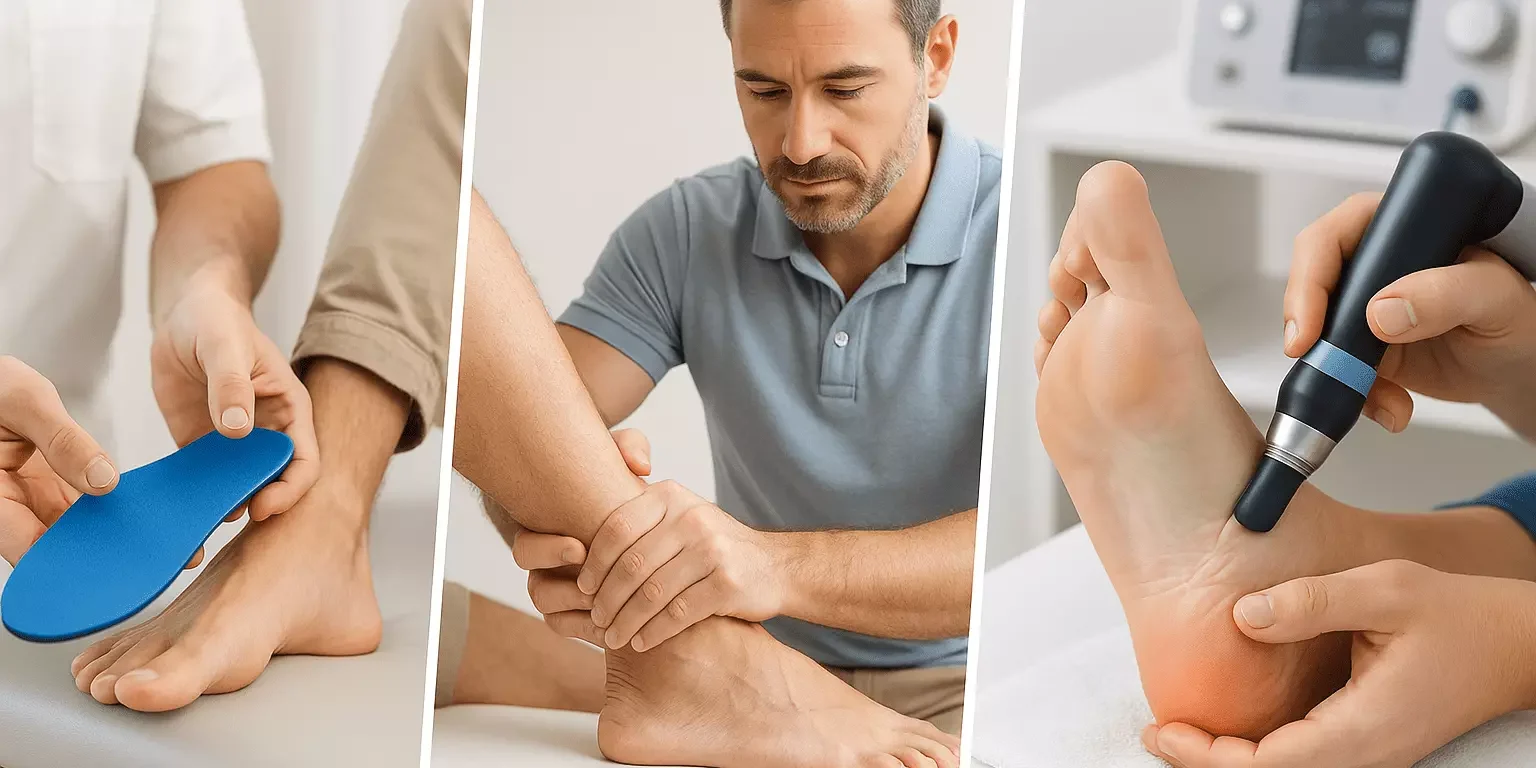
Choose shoes with firm heel support and cushioned soles, and replace worn pairs. Because footwear matters during and after exercise, wear supportive shoes all day and limit time in high heels. Check your athletic shoes for uneven wear on the soles. Different activities call for different shoes. Wearing the right shoe for each activity reduces strain on your heel, and it helps your foot move as intended.
If you are unsure which shoe fits your activity, a specialist at a running or athletic store can assess your gait and make a recommendation. The fit of your shoe also matters. Your heel should sit firmly in the shoe without lifting during movement. Lacing technique can also affect fit; a heel-lock lacing pattern keeps the back of the shoe snug. Take time to check the fit each time you buy a new pair.
Recovery Steps After Exercise
A few consistent steps can reduce strain on your heel and support recovery between sessions:
- Stretch after every session: Hold calf and plantar stretches for 30 seconds each side to reduce tightness and morning stiffness.
- Ice within 30 minutes of activity: Apply an ice pack for 15–20 minutes with a cloth barrier to target inflammation while it is still building.
- Strengthen supporting muscles: Towel scrunches, heel raises, and single-leg balance work help distribute load away from the heel.
- Use night splints if mornings are painful: These hold your foot in a gentle stretch overnight to prevent tissue from tightening while you sleep.
- Work with a physical therapist: A therapist can correct technique, address muscle imbalances, and guide a safe return to sport.
Adding these steps to your routine does not require extra equipment or significant time. Icing after each session, rather than only when pain spikes, makes it a reliable recovery habit. Keep your tools accessible so the steps are easy to follow through. Stretch your calves after exercise, and stretch the band of tissue along the bottom of your foot. Hold each stretch for about 30 seconds, and repeat it several times on each side.
Book a Heel Pain Evaluation
These steps address daily habits, but they do not replace a medical evaluation. If heel pain limits your usual activities, contact a foot specialist. Regular reliance on pain medication is another reason to seek care. A specialist can identify the cause. They will build a treatment plan around your activity goals. Book an appointment to discuss your options, and you should plan your next steps.