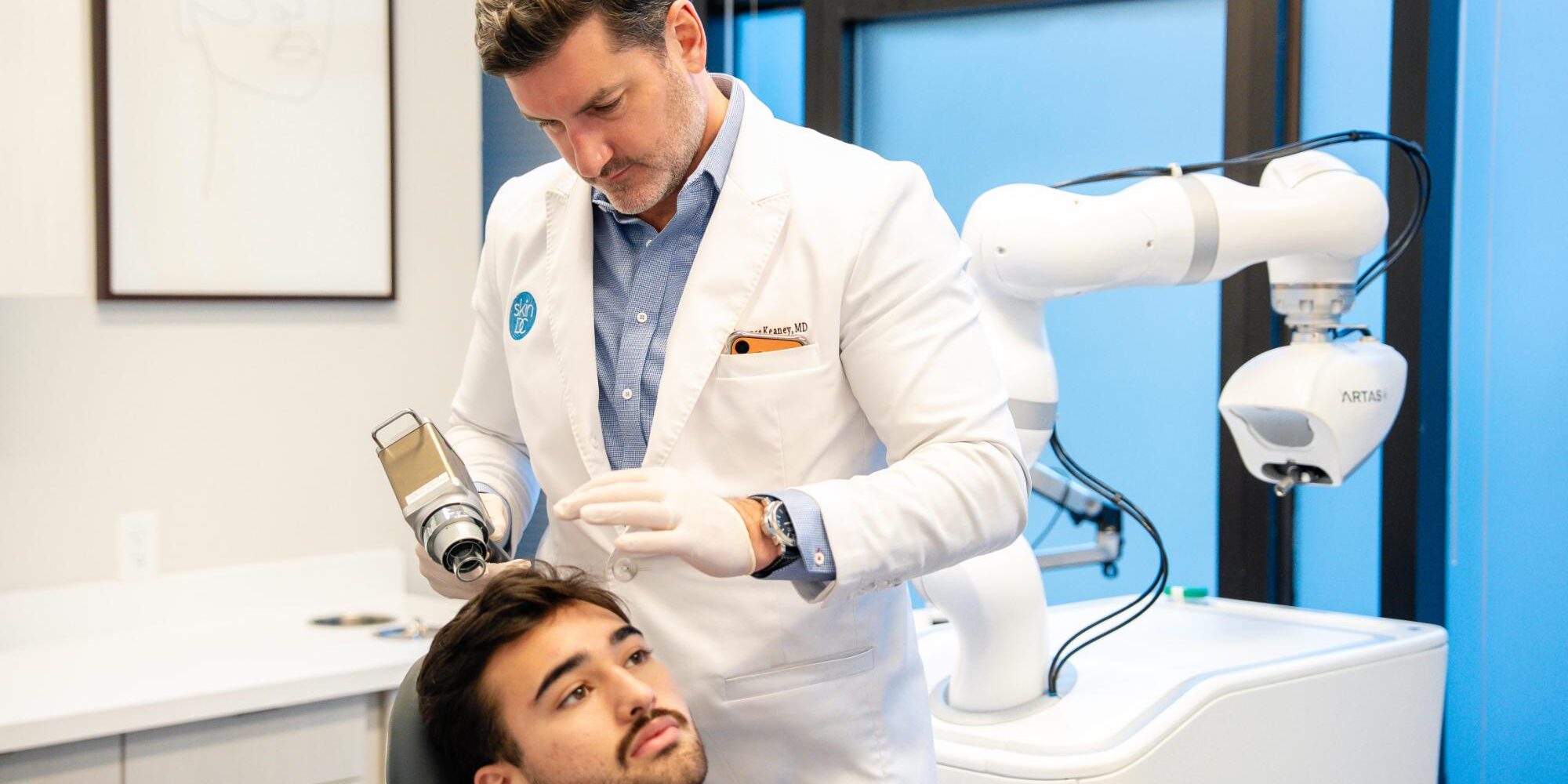
Hair transplant procedures offer different techniques, and they move viable follicles from donor sites to targeted regions on your scalp. Technicians carefully extract these hair units and place the grafts into specific thinning areas. Because surgeons use minimally invasive tools, patients may experience much shorter recovery times after treatment. Here is more information on minimally invasive hair transplant techniques:
Body Hair Transplants
Clinicians gather hair from the chest, and they implant these hairs onto the scalp. If a patient lacks sufficient scalp hair, doctors use body hair as an alternative donor source. The extraction process involves tiny punches to remove individual follicles from various skin surfaces. Body hair behaves differently from scalp hair, but it provides extra volume for severe hair loss cases.
While chest hair remains the most common choice, surgeons sometimes harvest grafts from the back or legs. Medical professionals match the hair texture to the recipient area for a natural appearance. The healing process takes a few days, and patients notice tiny scabs around the extraction sites. While body hair transplant methods may take longer, they give men with limited scalp donor zones another option.
FUE Hair Transplants
Follicular unit extraction (FUE) removes individual hair follicles directly from the back of the human head. Because the doctor uses a micro-punch tool, this technique does not leave a large linear scar. The medical team cleans the extracted units thoroughly before preparing them for the implantation phase. This is opposed to the more invasive follicular unit transplantation (FUT) that removes an entire strip of skin and hair.
The surgeon creates tiny incisions in the recipient zone, and assistants place the grafts into these slits. The angle of each incision determines the growth direction of the newly transplanted hair. After the procedure finishes, the scalp requires gentle washing to protect the newly placed follicles. This precise insertion technique aims for a natural hairline that blends with your existing hair growth.
When the transplanted hairs enter a resting phase, they shed within a few weeks after surgery. New growth typically begins after three months, and full results become visible after a long-term period. Even though the initial hairs fall out, the underlying follicle remains healthy beneath the skin surface. FUE stands as a major minimally invasive option for modern hair restoration practices.
Beard Transplants
A beard transplant relocates healthy hair follicles to patchiness on the face or jawline. Surgeons typically extract grafts from the neck area, and they implant them to create facial hair density. Doctors follow specific guidelines to design a realistic beard shape for you:
- Mapping the facial contours
- Selecting hairs with appropriate thickness
- Placing grafts at the correct angle
Once the transplanted beard hairs begin growing, you may shave or trim them normally.
Eyebrow Transplants
Eyebrow restoration requires extreme precision, and technicians use the finest hairs available for this procedure. Because eyebrow hairs grow almost flat against the skin, the surgeon must angle the incisions sharply. The medical team places each hair meticulously, so the brow shape looks entirely natural upon healing. Patients must trim these transplanted hairs regularly to maintain the desired eyebrow length over time.
Schedule a Hair Transplant Session
If you have questions about these minimally invasive methods, a professional consultation provides the answers. A trained specialist evaluates your specific hair loss pattern during an initial clinic visit. Before you select a particular procedure, the doctor reviews your medical history and hair goals. Contact a medical office today to book your appointment and start planning your personal hair restoration strategy.