LASIK (laser-assisted in situ keratomileusis) is a refractive eye surgery that reshapes the cornea, the eye’s clear front surface. This procedure treats nearsightedness, farsightedness, and astigmatism, reducing a patient’s reliance on glasses or contact lenses. Good candidates for this surgery are adults 18 or older whose vision prescription has remained stable for at least one year. Candidates should also have healthy eyes and sufficient corneal thickness. Here’s information on what to expect before, during, and after getting LASIK surgery:
What To Expect Before Surgery
Before an eye care specialist can confirm your candidacy for LASIK surgery, you first need a comprehensive eye exam and consultation. During this visit, your provider will measure corneal thickness, map the corneal surface, check pupil size, and evaluate tear production. These measurements help determine whether LASIK is appropriate for your eyes. Use this appointment to discuss your medical history, current medications, and any previous eye conditions or injuries.
Ask about potential risks, possible side effects, and realistic outcomes based on your prescription. If you wear contact lenses, you will likely need to stop wearing them before your evaluation and surgery. You usually stop wearing soft lenses 1 to 2 weeks in advance; rigid gas permeable lenses may require 3 weeks or more. Contact lenses temporarily change the cornea’s shape, which may affect measurement accuracy.
What To Expect During Surgery
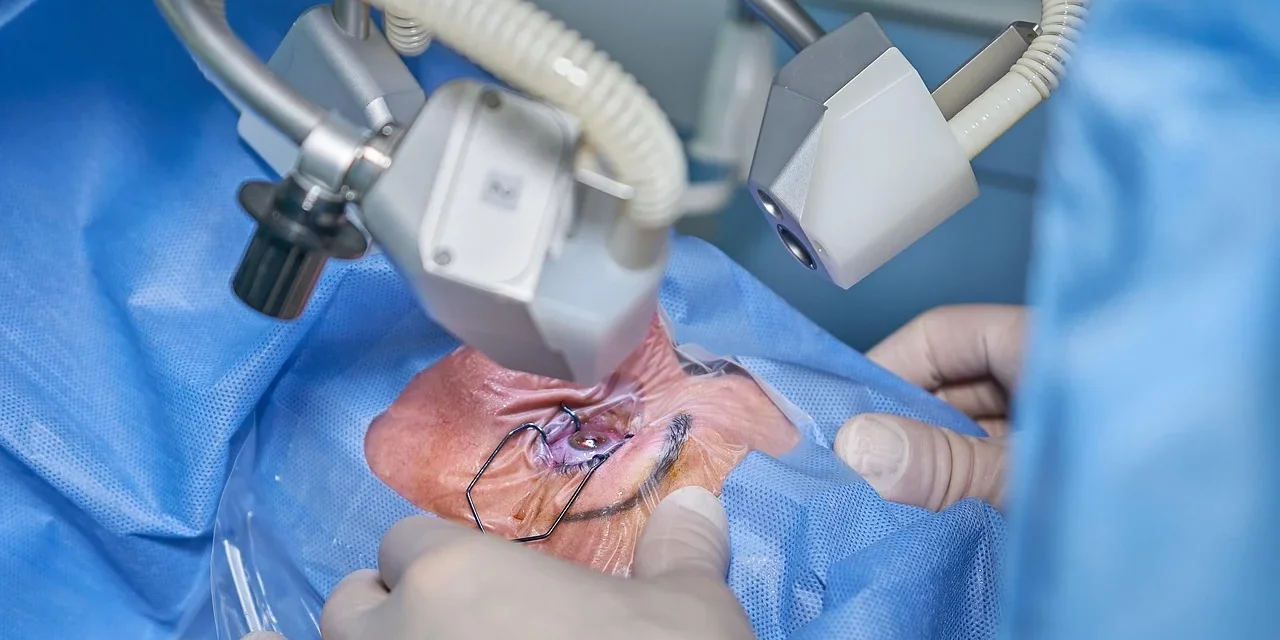
LASIK is an outpatient procedure that typically takes 15 to 30 minutes for both eyes. Avoid wearing eye makeup, lotions, and perfumes on surgery day. Arrange for someone to drive you home, since your vision may be blurry afterward. For this surgery, you will lie on your back beneath the laser system while your surgeon applies numbing eye drops. Some practices also give a mild oral sedative.
A small instrument called a lid speculum holds your eyelids open. Your surgeon will then use a femtosecond laser or a microkeratome blade to create a thin, hinged flap in the cornea. You feel light pressure during this step, and your vision may dim briefly. The surgeon lifts the flap to expose the underlying corneal tissue.
An excimer laser then removes microscopic amounts of tissue to reshape the cornea according to your prescription. You will be asked to focus on a target light while the laser works. This portion usually lasts less than a minute per eye. Afterward, the surgeon repositions the flap, which adheres without stitches.
What To Expect After Surgery
Immediately after surgery, you may experience blurry vision, mild burning, itching, or a gritty sensation. Your eye care doctor will recommend resting for several hours once you get home. You will also receive protective shields to wear while sleeping. Your provider will prescribe antibiotic and anti-inflammatory eye drops, along with lubricating drops for dryness. Recovery guidelines include avoiding a few activities for one to two weeks, such as:
- Swimming
- Hot Tubs
- Contact Sports
- Eye Makeup
Your vision may fluctuate during the first several weeks as the eyes heal, but your provider will tell you when to resume tasks like driving. Follow-up appointments are a standard part of LASIK aftercare. The first visit occurs within 24 to 48 hours after surgery, when your provider checks the flap and measures your vision. Additional visits are scheduled at one week, one month, three months, and six months. The exact schedule varies by practice; some providers also request a one-year visit before you return to routine annual eye exams.
Learn More About LASIK Surgery
LASIK surgery helps you experience life without glasses or corrective lenses. To learn more about laser-assisted in situ keratomileusis, contact an optometrist in your area to schedule a consultation today. A specialist can answer questions and help you prepare effectively for your evaluation, surgery, and aftercare.