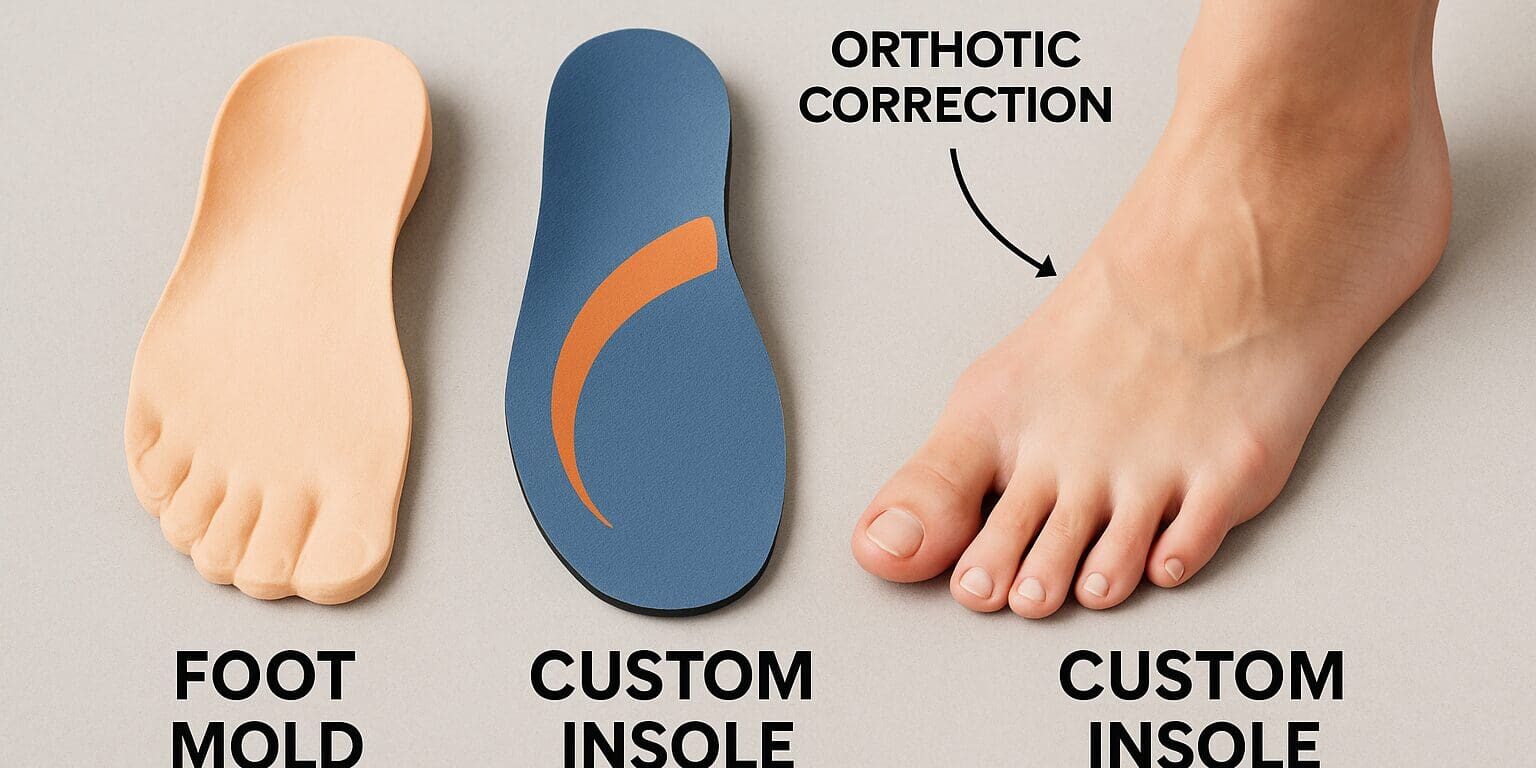
Custom orthotics are shoe inserts built from a mold or scan of your feet, and when a provider designs them, they study your arch height, heel shape, and walking pattern. Many people use them after a sprain or fracture, and others wear them for long-term foot problems. Here is more information on their role in the healing process:
Correcting Misalignments
Your feet set the angle for your legs, so small foot problems typically travel upward. Overpronation, or rolling inward too far, is one example. When the foot rolls inward, the knee may twist slightly with each step. Orthotics with wedges or raised posts guide the foot toward a more neutral position. Typical signs of misalignment include:
- Uneven wear on the soles of your shoes
- Chronic pain on one side of the knee or hip
- Frequent ankle rolling
- Very flat or very high arches
Stabilizing the Skeletal System
When you walk, each foot absorbs force greater than your full body weight. That force travels up through your ankles, knees, and hips. A healing joint has less capacity to withstand this load, so uneven pressure may slow recovery.
Custom orthotics support the arch, and they hold the heel in a steady position. Since the foot moves less from side to side, nearby muscles and ligaments face less strain. This stability matters most after ankle sprains and stress fractures.
After a visit for a sprain, your provider may suggest orthotics alongside a brace or walking boot. The boot protects the injury early on, and the orthotic supports you in regular shoes later. If pain returns during this transition, mention it at your next visit.
Accommodating Bunions
A bunion forms when the big toe joint shifts outward and creates a bony bump. Tight shoes press on the bump, and the joint may become swollen and sore. This added pain typically alters your stride. A changed stride makes recovery from other injuries harder.
Orthotics do not straighten the toe or remove a bunion. Instead, they shift pressure away from the joint while you stand and walk. Some designs add a pad behind the toes, and others pair well with wide-toe shoes. Ask your provider whether other treatment options fit your situation.
Preventing Chronic Pain
Even after an injury heals, old movement habits can linger for months. Limping or favoring one leg shifts weight onto other joints. That extra load may lead to back, hip, or foot pain, so early support matters. Orthotics aim to spread your weight more evenly during this period.
Orthotics work ideally as one part of a recovery plan. Stretching builds flexibility, and strength exercises support the muscles around the injury. Proper footwear matters too. If you notice new pain while wearing orthotics, schedule a follow-up for an adjustment. Daily habits to pair with orthotics:
- Replace worn shoes periodically
- Break in new orthotics over one to two weeks
- Stretch your calves and arches each day
- Keep follow-up visits on your calendar
Try Custom Orthotics for Pain
If foot or leg pain follows an injury, a medical evaluation is a practical first step. A provider examines your gait, and they may order X-rays to check for underlying damage. From there, you and your provider choose next steps together. Orthotics may become part of your plan if your foot structure calls for extra support.