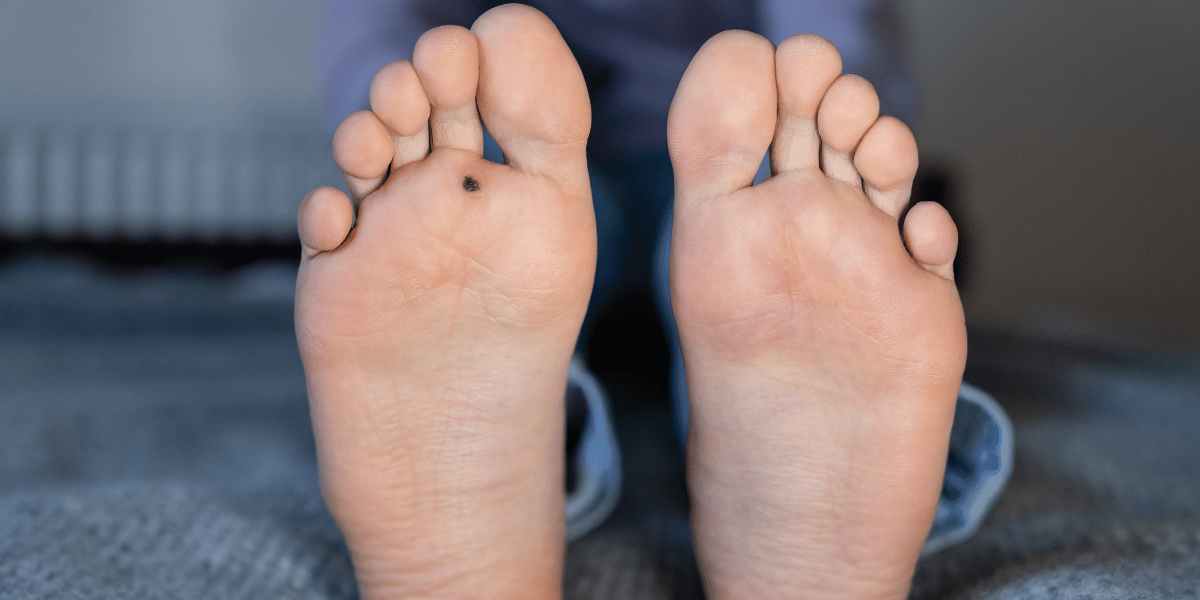
Plantar warts form as rough skin growths on your feet. They affect many people, and you must provide proper care. Because they grow inward, you might find walking becomes painful. Early treatment prevents further complications.
Causes of Plantar Warts
HPV exists in many environments, and it thrives in damp places. The human papillomavirus (HPV) causes warts to develop. Sometimes, the virus enters your skin through small cuts you get from walking barefoot in locker rooms, pools, or showers. Public sites with wet floors pose a higher risk, especially if you go barefoot. Multiple strains of HPV exist. Your immune system helps prevent infection, but certain strains escape detection. Practicing personal hygiene helps you reduce this risk. The virus spreads through direct skin contact, including when you touch a wart on yourself or someone else. Here are some practical steps you can take to reduce your risk of HPV exposure:
- Wear sandals or protective footwear in communal showers and locker rooms.
- Change your socks daily and keep your feet dry.
- Avoid direct contact with warts, both your own and others’.
- Use separate towels, socks, or shoes—do not share these items.
- Wash your hands thoroughly after touching your feet or treating a wart.
The virus is not visible, so prevention strategies focus on limiting exposure and protecting the skin.
Symptoms of Plantar Warts
Plantar warts show a variety of signs on your feet. You see a small, rough growth, and these commonly appear on the heel but also develop at the base of the toes or on the ball of the foot. Because plantar warts grow inward beneath a callus, standing can put pressure on the area. Discomfort starts mild and increases as the wart changes in size or spreads. For some people, walking or standing for long periods becomes difficult. Participating in sports or activities may feel uncomfortable. Pain makes you adjust your step, which gives you aches in other parts of your foot or leg. The growth interrupts your skin’s usual lines or ridges, so the surface looks uneven. You might experience increased pain during activity, but resting your foot gives temporary relief.
Treatments for Plantar Warts
There are several options for managing plantar warts, while each approach has a specific process. Bako VerruStat™ liquid wart remover is a medical-grade solution that breaks down wart tissue by penetrating the affected skin. Apply it as directed, and your healthcare provider gives guidance or follow-up. Some people have positive experiences, but deeper warts may take longer to treat. Salicylic acid is available as patches, gels, or liquid. Use it daily for several weeks.
If you soak your foot in warm water before applying the medicine, it softens your skin and aids removal. Consistency with salicylic acid helps progress, and mild irritation or redness is common as the wart reacts to treatment. These compounds attack the virus from multiple angles, and they also aim to keep healthy skin safe. If topical treatments or compound medications do not work, your provider might recommend cryotherapy.
Action Steps for Your Recovery
If you address plantar warts promptly, you support better foot health. Early intervention stops the spread, and it minimizes your discomfort. Because warts do not always disappear on their own, take action today. You deserve pain-free mobility, and modern treatments provide excellent results. If you want lasting relief, consult a podiatrist. Schedule an appointment with a specialist soon.