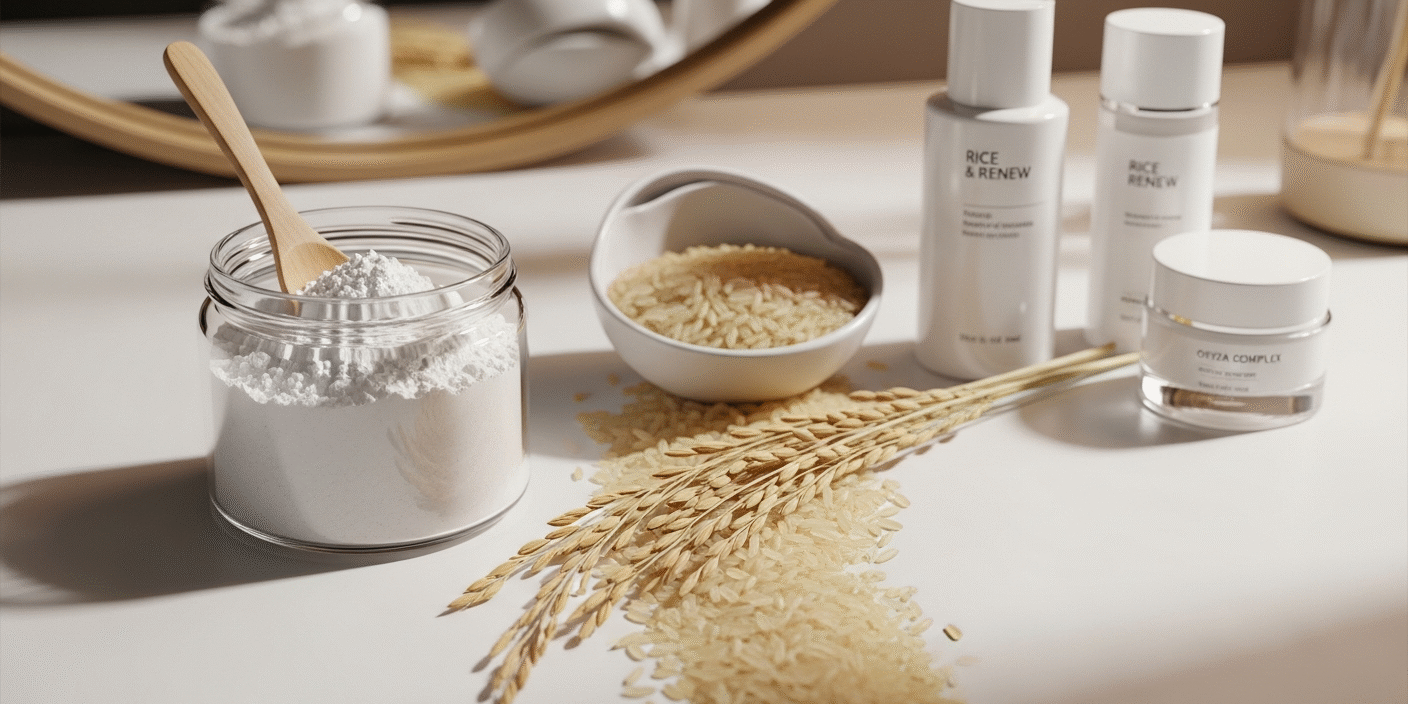
Have you ever wondered about the secret behind your favorite makeup’s silky, matte finish? The answer might be simpler than you think: rice starch. This natural ingredient has been a staple in personal care for centuries and is making a huge comeback in modern skincare products. Valued for its gentle yet effective properties, rice starch is transforming everything from face powders to lotions. Let’s explore why this humble grain derivative is becoming an essential component in creating high-performance, skin-loving cosmetics.
Key Highlights
- Rice starch is a key ingredient in many skincare products due to its excellent absorbent properties, which help control oil and shine.
- Its fine, silky texture enhances the feel of cosmetic formulations, providing a smooth, matte finish.
- Gentle enough for sensitive skin, rice starch can soothe irritation and redness, making it a popular choice in various personal care items.
- As a natural, plant-based ingredient, it aligns perfectly with the clean beauty movement, serving as a safe alternative to talc.
- This versatile powder is used in everything from face powders and dry shampoos to lotions and baby products.
Understanding Rice Starch in Cosmetic Science
Rice starch, known scientifically as Oryza Sativa starch, is a fine powder extracted from rice grains. In cosmetic formulation, it’s prized for its ability to absorb oil, provide a smooth feel, and act as a thickener. It’s a multi-functional ingredient that improves both the performance and texture of skincare and makeup.
Unlike other powders, its unique structure allows it to offer these benefits without drying out the skin. Understanding what makes it different from similar ingredients reveals why it’s a superior choice for formulators. Let’s look closer at what it is and how it compares to regular rice powder.
What Is Rice Starch and How Is It Sourced?
Rice starch is a pure carbohydrate powder extracted from rice grains, or Oryza Sativa. The sourcing process begins with sustainably harvested rice, which is then ground. Through mechanical methods and filtration, the starch is carefully separated from proteins and other components of the grain.
This meticulous process results in a very fine, white powder with a high level of purity. This purity is crucial for cosmetic use, as it ensures the ingredient is gentle and performs consistently in various formulations. It is commonly used in skincare and makeup products.
Because of its natural origin and gentle properties, rice starch has become an essential ingredient in the beauty industry. It’s especially valued in products designed to mattify the skin, absorb excess sebum, and soothe irritation, making it a versatile and beneficial component for all skin types.
How Rice Starch Differs from Traditional Rice Powder in Cosmetics
While both come from rice, rice starch and rice powder are not the same. The key difference lies in their composition and refinement. Rice powder is made by simply grinding whole rice grains into a powder, meaning it contains starch, protein, and fiber.
Rice starch, on the other hand, is a more refined fine powder. It undergoes an extraction process that isolates the starch component, resulting in a purer substance with a smaller particle size. This increased surface area is what gives rice starch its superior absorption capabilities.
Here’s a quick comparison:
- Purity: Rice starch is almost pure starch, while rice powder contains other parts of the rice grain.
- Texture: The finer particles of rice starch create a silkier, smoother feel compared to the slightly grittier texture of rice powder.
- Absorption: Rice starch has enhanced oil and moisture absorption due to its refined nature.
Key Properties of Rice Starch for Skin Care
The remarkable properties of rice starch make it a standout ingredient in personal care products. Its primary function is as an absorbent, effortlessly soaking up excess oil and sweat to leave your skin feeling fresh and matte. This makes it ideal for controlling shine without causing dryness.
Beyond its absorbent nature, rice starch significantly improves the texture and skin feel of cosmetics. It imparts a silky, velvety smoothness to formulations, enhancing the user experience. We will now examine how it transforms product textures and why it is a cornerstone of clean beauty.
Absorption, Texture, and Feel in Cosmetic Formulations
One of the most celebrated qualities of rice starch is its fantastic absorbent properties. It effectively manages oil and moisture on the skin’s surface, which helps to create a long-lasting matte finish. In a formulation, this means products like foundations and powders can control shine without feeling heavy or cakey.
The ingredient also acts as a texturizing agent, contributing to a consistent texture in creams and lotions. When heated in water, it forms a stable gel, working as a natural thickener. Even when used cold, it enhances the product’s feel, turning greasy formulations into something more elegant.
Ultimately, this silky powder provides a luxurious, non-greasy feel. It improves the glide of products, allowing for smoother and more even application. Your skin is left feeling soft and velvety, making the entire experience more pleasant.
Role in Natural and Clean Beauty Products
Rice starch plays a vital role in the clean beauty movement. As consumers increasingly seek transparent and natural ingredients, this plant-derived powder has become a go-to choice for formulators. It is sustainably sourced, vegan, non-GMO, and cruelty-free, checking all the boxes for eco-conscious personal care.
Its biggest contribution to clean beauty is serving as a safe and effective alternative to talc. For years, talc has been a controversial ingredient, but rice starch delivers similar, if not better, performance without the associated health concerns. This makes it a key component in natural mineral makeup and baby powders.
Here’s why it’s so popular in clean beauty:
- Natural Origin: It is derived from a renewable, plant-based source.
- Talc-Free Solution: It provides a safe, high-performing substitute for talc in powders.
- Gentle and Safe: Its non-irritating nature makes it suitable for all skin types, reinforcing the clean beauty ethos of using gentle ingredients.
Major Benefits of Rice Starch in Skin Care
The benefits of rice starch in skincare are numerous and impressive. Its ability to absorb excess sebum makes it a powerful ally for those with oily or combination skin, as it provides a matte finish without clogging pores or stripping the skin of its natural moisture.
Furthermore, its gentle and soothing properties make it incredibly beneficial for sensitive skin. It can calm irritation and reduce redness, offering comfort where other ingredients might cause reactions. Let’s look at its soothing effects and oil-controlling power in more detail.
Soothing Effects on Sensitive Skin
If you have sensitive skin, you know how challenging it can be to find products that don’t cause irritation. Rice starch is a game-changer in this regard. It is exceptionally gentle and well-tolerated, making it a safe choice for even the most reactive skin types. Its natural composition helps to calm discomfort and reduce visible redness.
The anti-inflammatory properties of rice starch can provide relief for conditions like eczema and general skin inflammation. When applied, it forms a soft, protective barrier that soothes the skin and minimizes friction, which is why it’s often found in products designed for delicate skin, including baby care items.
Because it doesn’t strip moisture, rice starch supports the skin’s natural barrier function. This helps prevent further irritation and keeps the skin balanced and comfortable. So, yes, rice starch is not only safe but also highly beneficial for sensitive skin in cosmetic formulations.
Oil Control and Matte Finish for Makeup
Struggling with unwanted shine by midday? Rice starch is your secret weapon for superior oil control. Its porous structure is highly effective at absorbing excess oil and sebum from the skin’s surface, leaving you with a fresh, matte finish that lasts for hours. This makes it an invaluable ingredient for anyone with oily skin.
When incorporated into makeup, such as foundations, setting powders, and primers, rice starch helps create a smooth, shine-free canvas. It diminishes the appearance of large pores and prevents makeup from creasing or sliding off due to oiliness. The result is a flawless look that stays put.
Here’s how rice starch helps you achieve a matte look:
- Absorbs Excess Oil: It soaks up oil without over-drying the skin.
- Reduces Shine: It provides an instant and lasting mattifying effect.
- Extends Makeup Wear: By controlling oil, it helps your makeup look fresh all day.
Applications of Rice Starch in Cosmetic Products
Rice starch is an incredibly versatile ingredient, finding its way into a wide array of personal care products. Its unique combination of properties—absorbent, texturizing, and soothing—makes it suitable for numerous cosmetic applications, from skincare to hair care.
Whether it’s providing a matte finish in a foundation or absorbing oil in a dry shampoo, this natural powder proves its worth time and again. Let’s explore some of the most common types of products where you can find this amazing ingredient at work.
Common Types of Skin Care and Makeup Using Rice Starch
You can find rice starch in a surprisingly large number of products on your bathroom shelf. In makeup, it is a star player in face powders, both loose and pressed, as well as setting powders and mineral foundations. It is also used in eyeshadows and blushes to help bind the pigments and improve texture.
Its applications extend far beyond makeup. Rice starch is a key ingredient in dry shampoos, where it absorbs scalp oils to refresh hair between washes. You will also find it in skincare products like lotions, creams, and gentle scrubs. Its soothing nature makes it perfect for aftershave products and deodorants.
Because of its gentleness, it is a staple in baby products, especially powders designed to protect delicate skin.
| Product Category | Specific Use of Rice Starch |
| Makeup | Face powders, foundations, setting powders for a matte finish. |
| Hair Care | Dry shampoos to absorb oil and add volume. |
| Skin Care | Lotions, creams, and scrubs to improve texture and feel. |
| Baby Products | Powders and lotions to soothe and protect sensitive skin. |
| Deodorants | Absorbs perspiration without blocking pores. |
Processing Rice Starch for Cosmetic Use
Not all rice starch is created equal. The kind used in your food is different from what goes into your skincare. Cosmetic-grade rice starch undergoes specific processing to ensure it meets high standards of purity and safety for topical application on skin and hair.
This involves advanced methods to isolate the starch and remove any impurities that could cause skin irritation. Understanding these production methods and the quality standards they adhere to helps explain why this ingredient is so reliable in cosmetics.
Cosmetic-Grade Production Methods
Producing cosmetic-grade rice starch is a precise science. The process starts with high-quality rice grains, which are ground into a slurry. From there, modern production methods often use a combination of mechanical separation and filtration to isolate the starch.
In some advanced techniques, an enzyme may be used to break down the proteins and fibers surrounding the starch granules. This step is crucial for achieving the highest level of purity. The goal is to remove anything that isn’t pure starch, as these other components could potentially cause skin reactions or affect the product’s stability.
After the separation is complete, the starch is washed, dried, and milled into an ultra-fine powder. Each step is carefully controlled to ensure the final product is consistent in particle size, texture, and performance, making it ready for use in sensitive skin and hair care formulations.
Quality Standards and Safety Considerations
When it comes to cosmetic ingredients, safety is paramount. Cosmetic-grade rice starch must meet strict quality standards to be used in personal care products. Reputable suppliers test each batch to ensure its purity, consistency, and freedom from contaminants. This guarantees that the ingredient is safe and performs as expected.
Generally, rice starch is considered very safe and non-irritating. It is well-tolerated by almost all skin types. However, as with any natural ingredient, there is a very small chance of an allergic reaction in individuals with a specific allergy to rice. A patch test is always a good idea when trying a new product.
Here are some key safety points to keep in mind:
- High Purity: Cosmetic-grade starch is refined to remove potential irritants.
- Low Allergy Risk: Allergies to rice starch are rare, but not impossible.
- Non-Comedogenic: In most cases, it does not clog pores, though excessive use on oily skin could be a consideration.
Choosing Rice Starch over Other Starches
Formulators have several types of starch to choose from, including those from corn, potato, and tapioca. So, why is rice starch often the preferred choice in personal care? The answer lies in its unique combination of particle size, texture, and performance.
It offers a superior skin feel and better aesthetic qualities compared to many alternatives. Its ability to create a silky, smooth finish while effectively absorbing oil makes it a top contender. Let’s compare its advantages and see why it frequently comes out ahead of other popular starches.
Comparative Advantages in Formulation Performance
In the world of cosmetic formulation, rice starch has several distinct advantages. Its particles are smaller and more uniform than those of many other starches, like maize (corn) starch. This results in a much silkier and less “chalky” feel on the skin, enhancing the luxury of the final product.
Its absorbent qualities are also finely balanced. While it is an excellent absorbent, it doesn’t overly dry the skin, maintaining a comfortable feel. This makes it more versatile for use in products intended for different skin types, from oily to sensitive. It also helps in maintaining the consistency of a formulation.
Here are some key performance benefits:
- Superior Texture: Provides a uniquely soft, velvety feel.
- Balanced Absorption: Controls oil effectively without causing dryness.
- Aesthetic Finish: Creates a translucent, natural-looking matte finish rather than an opaque one.
Popular Alternatives and Why Rice Starch Leads
For years, talc was the standard for absorbent powders, but health concerns have led formulators to seek safer alternatives. Among starches, maize (corn) starch and potato starch are common substitutes. However, rice starch often outperforms them in cosmetic applications.
Maize starch has larger particles, which can feel grittier and appear more opaque on the skin. Potato starch can also be less refined, affecting the final texture. Rice starch, with its ultra-fine, silky particles, provides a more elegant feel and a more transparent finish, making it ideal for face products where a natural look is desired.
This table highlights the key differences:
| Starch Type | Particle Size | Skin Feel | Finish on Skin |
| Rice Starch | Very Fine | Silky, smooth, velvety | Translucent, matte |
| Maize Starch | Larger | Can feel slightly gritty | More opaque |
| Potato Starch | Variable | Can feel heavier | Can be less refined |
| Talc | Fine | Smooth | Controversial safety |
Potential Drawbacks and Side Effects of Rice Starch
While rice starch is overwhelmingly safe and beneficial, it’s good to be aware of any potential drawbacks. Like any cosmetic ingredient, it may not be perfect for absolutely everyone. The main considerations revolve around very sensitive skin, potential allergies, and proper usage.
However, the side effects are extremely rare and usually mild. Most issues arise from misconceptions about how the ingredient works or from using it incorrectly. Let’s address these considerations to give you a complete picture.
Considerations for Sensitive Skin and Allergies
For those with extremely sensitive skin or specific skin conditions, it’s always wise to be cautious with new ingredients. Although rice starch is known for its soothing properties and is generally recommended for sensitive skin and even eczema, a reaction, though rare, is not impossible.
The primary concern would be an allergy to rice itself. If you have a known food allergy to rice, you should avoid using products containing rice-derived ingredients. An allergic reaction could manifest as redness, itching, or irritation. Performing a patch test by applying a small amount of the product to your inner arm can help rule out any issues.
In very rare cases, if the skin is extremely dry, the absorbent nature of the starch could lead to a feeling of tightness. This can usually be avoided by using it in a well-formulated product that also contains moisturizing agents.
Misconceptions in Personal Care Product Usage
There are a few common misconceptions about rice starch in personal care products. One is that, as a starch, it might “feed” bacteria or clog pores. In a properly preserved formulation, this is not a concern. Cosmetic-grade rice starch is processed for purity and stability, and when used as directed, it is considered non-comedogenic.
Another misconception is confusing it with talc. While it serves as an excellent substitute for talc, it does not share talc’s controversial profile. Rice starch is a natural, plant-based ingredient with a strong safety record.
Here are a few points to clarify:
- Clogging Pores: When used in moderation within a balanced formulation, it is unlikely to clog pores.
- Feeding Bacteria: Cosmetic products contain preservatives to prevent microbial growth.
- Causing Dryness: It absorbs excess oil, not essential moisture, so it shouldn’t dry out the skin unless used in excessive amounts on very dry skin.
Conclusion
In summary, rice starch is a versatile ingredient in cosmetics that offers numerous benefits for skin care. Its unique properties, including excellent absorption and soothing effects, make it a preferred choice among formulators looking to enhance product performance. Whether you’re dealing with sensitive skin or seeking oil control for a flawless matte finish, rice starch can meet your needs while aligning with clean beauty principles. As you explore cosmetic options, consider the advantages of rice starch over traditional alternatives. Embracing this ingredient could lead to transformative results in your skin care routine. If you’re curious about how rice starch can elevate your beauty regimen, don’t hesitate to reach out for a free trial or consultation!
Frequently Asked Questions
Is rice starch safe for everyday use in skin care?
Yes, rice starch is considered very safe for daily use in personal care and cosmetics. Its gentle, non-irritating nature makes it suitable for all skin types, including sensitive skin. Its safety has been well-established, making it a reliable ingredient in your everyday routine.
Can rice starch help reduce shine and oiliness in makeup?
Absolutely! Rice starch is excellent for oil control. Its absorbent properties soak up excess sebum, reducing shine and providing a smooth, matte finish. This makes it a popular ingredient in foundations, setting powders, and primers designed to keep makeup looking fresh all day.
What role does rice starch play in clean beauty trends?
Rice starch is a key player in clean beauty. As a natural, vegan, and sustainably sourced ingredient, it fits perfectly with the movement’s ethos. It serves as a safe and effective absorbent, often replacing controversial ingredients like talc in various skincare products and cosmetics.