
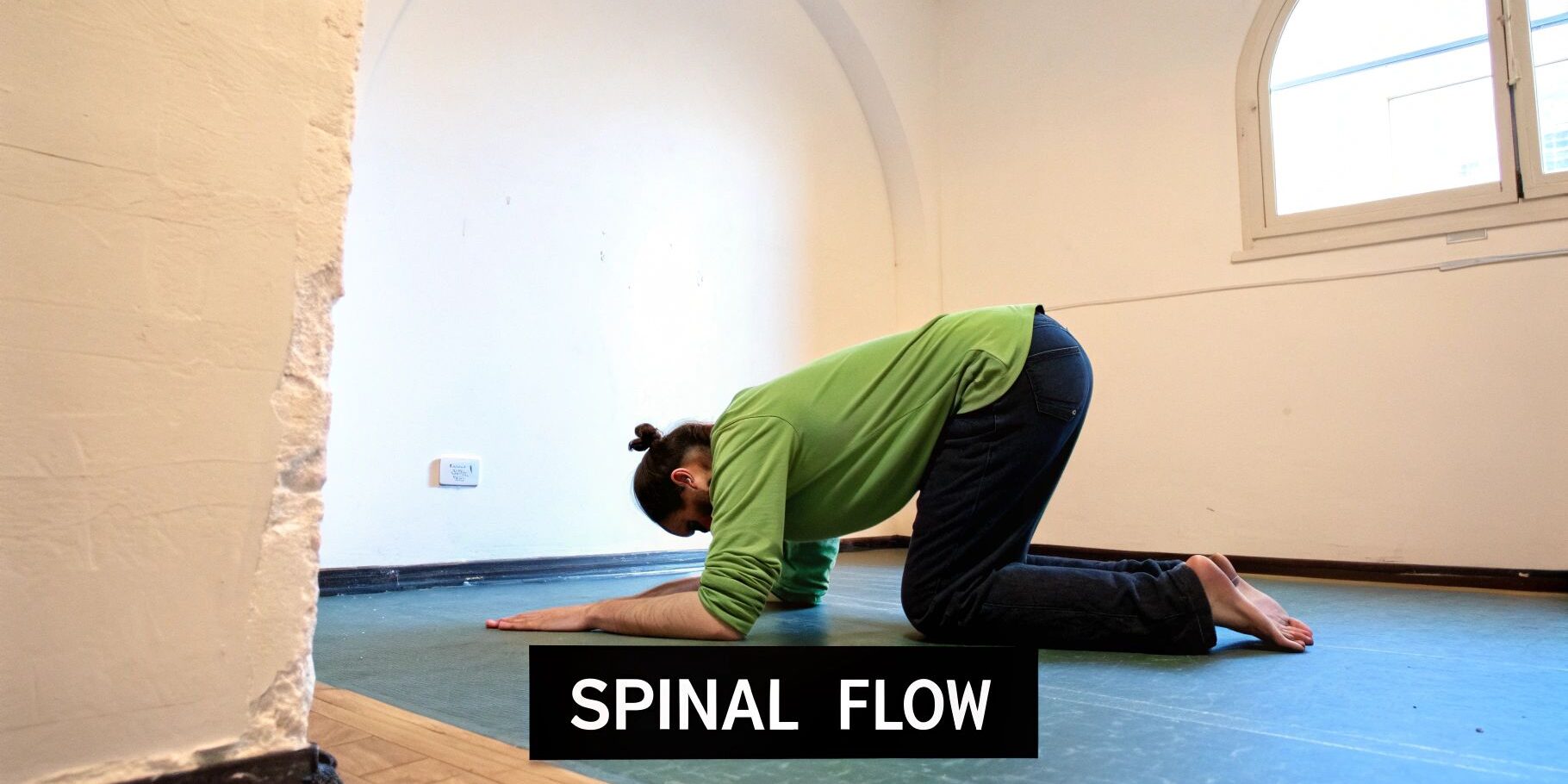
Back pain is a common reason adults visit a doctor or miss work. It may stem from muscle strain, poor posture, or long hours of sitting. Some people feel a dull ache in the lower back, while others notice sharp pain that travels into the hips or legs. Regular exercise, combined with medical guidance, helps address symptoms and the underlying cause. Here are some exercises to alleviate back pain:
Supine Stretches
Supine stretches are done while lying on your back. A firm surface, such as a yoga mat on the floor, provides steady support for your spine. Since the spine is supported, tight lower-back muscles can begin to decompress. A simple stretch is the knee-to-chest stretch. Lie with both knees bent and feet flat. Bring one knee toward your chest; keep the other on the floor. Pull the raised knee toward your chest. This stretch helps loosen tight muscles in the lower back and buttocks.
The supine twist gently stretches the muscles along the sides of your lower back and improves spinal mobility. With both knees bent and feet flat, stretch your arms out to the sides at shoulder height, and keep your palms facing down. Lower both knees to one side while your shoulders stay on the floor.
Seated Stretches
When you sit for long periods, adding stretches to your routine can help relieve back pain and improve posture. Use a sturdy chair without wheels and sit with your feet flat on the floor. If you work at a desk, some stretches to try include:
- Seated forward bend: Sit near the edge of the chair with your knees hip-width apart. Slowly fold forward from the hips, letting your arms and head hang toward the floor. Then roll up one vertebra at a time. This lengthens the muscles in your lower back and helps relieve stiffness after prolonged sitting.
- Seated spinal twist: Sit tall, and place your right hand on the outside of your left knee and your left hand on the back of the chair. Turn your upper body to the left while your hips face forward. Repeat on the other side. This stretch loosens the muscles along your spine and helps maintain mobility.
- Seated figure-four: Cross your right ankle over your left knee. Keep your back straight and lean forward until you feel a stretch in your right hip and buttock. Switch legs and repeat. This targets tight hip and buttock muscles that can become stiff from prolonged sitting.
Spinal Flexors Stretches
Spinal flexors are the muscles that bend your trunk forward. This group includes the abdominal muscles and the hip flexors. Long periods of sitting keep these muscles shortened, so stretching them involves gently extending, or arching, the spine. One option is the standing back extension. Stand with your feet hip-width apart and your hands on your lower back. Lean back slightly, keeping your knees straight but not locked. The cat-cow stretch is also commonly recommended. On your hands and knees, slowly arch your back. Pull your belly upward, and bring your head down. Reverse the posture by dropping your back toward the floor and lifting your head.
Visit a Back Pain Specialist
Stretching is one part of managing back pain, and results vary from person to person. Pain that lasts longer than a few weeks, follows an injury, or comes with numbness or weakness requires a professional evaluation. A back pain specialist examines your spine and may order imaging to identify the source of your symptoms. Schedule an appointment with a back pain specialist today.