Depression takes many forms. Patients require new medical solutions, since medical science continues to evolve. Depression affects daily life significantly, and the symptoms vary between individuals.
What Is Psychotherapy?
Psychotherapy is a structured approach to aid in depression. Licensed mental health professionals facilitate these conversations in a private setting. Each method focuses on different aspects of thoughts and behaviors. Sessions build skills and address individual experiences, such as:
- Sessions may involve identifying stressors and practicing coping strategies.
- You may be asked to track your mood, thoughts, or behaviors between appointments.
- Privacy and confidentiality support open, honest communication.
- Progress is supported by active participation and consistent practice of skills.
- Stress management and relaxation techniques are often taught as part of treatment.
Discussion during therapy centers on coping strategies, and they build practical skills. Sessions might involve activities to help identify stressors. You may be asked to track how you feel and react outside sessions. The goal is to create an environment where you share experiences and learn helpful strategies. Privacy is respected, supporting open and honest conversation. Active participation helps you practice new skills. Therapists offer guidance throughout the process.
What is rTMS?
Doctors can use rTMS for treatment-resistant depression. The acronym stands for repetitive transcranial magnetic stimulation. Equipment is placed against your head. During treatment, magnetic fields target specific brain regions for major depressive disorder (MDD). The procedure is non-invasive, with no surgery involved. You stay awake during sessions. The sensation feels like gentle tapping on the scalp, so no anesthesia is needed.
Treatment happens in a clinic, while in a supportive environment. rTMS offers an alternative path for MDD, and professionals monitor your progress. Patients sit in a comfortable chair, and safety protocols are followed. Providers track changes in symptoms using questionnaires or mood-tracking tools. Magnetic pulses focus on different brain areas depending on your symptoms and goals. Your provider will answer any questions beforehand.
What Is MeRT?
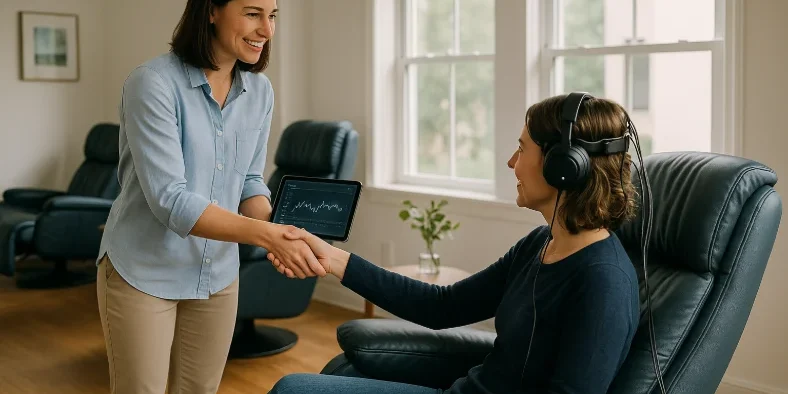
MeRT involves direct brain stimulation, while using several coordinated technologies. The treatment uses a specialized electroencephalogram. Doctors map brain activity to guide each therapy plan. The data then determines the placement and intensity of stimulation. Every treatment plan is unique, and sessions adapt to your brain patterns. If you have PTSD with depression, doctors focus on brain regions for mood and emotional regulation. It may be recommended for long-term depression or adults with post-traumatic stress. The equipment delivers gentle magnetic pulses matched to your brain’s needs. You rest comfortably during treatment, usually in a quiet, supportive environment. The protocol adapts as needed, and doctors adjust settings. The goal is optimal brain function. Each session promotes balance and communication.
Treat Your Depression Today
Finding the right treatment requires medical guidance, so proper evaluation is absolutely essential. Self-diagnosis is never recommended. You can review these options, and discuss them with a doctor. Medical providers understand these complex therapies. They assess your complete medical history. Your safety is their primary concern. They will recommend appropriate care. Schedule an initial medical appointment today. Before you choose a treatment path, professionals must evaluate your symptoms.